Fiction
The Last Light in the Laundry
Sample story. A neighbourhood laundry, the last train of the night, and a door nobody quite closes.
At twenty past nine the last train you can hear from here goes past. It is not the last on the line, but it is the last one that reaches this street with enough force to shake the glass, and Ampai has used it for years the way you would use a bell. When the noise goes, she turns off the dryers.
The one at the back first, the one that runs badly and has to be hit on the side with a flat palm, not too hard and not too soft, in the exact spot where the paint stopped existing years ago. Then the middle one. The one by the door always last, because it is the one that puts light on the pavement, and because while it is on somebody can still come in.
The boy from upstairs comes down on Tuesdays. He brings a small bag, the kind that does not justify a laundry, and sits in the plastic chair to wait forty minutes for two t-shirts. Ampai has never told him he could wash them in the sink. He has never said why he does not.
They talk little. About the heat, which is a subject that never runs out. About the building work on the corner, fourteen months now, which has changed the sound of the neighbourhood in a way neither of them could describe but both notice on the way home. Sometimes he shows her something on his phone and she makes a movement with her head that commits to nothing.
The dryer at the back stops. Ampai hits it with her palm and it starts again.
Her husband set the place up with two second-hand machines and the idea that people in this neighbourhood had nowhere to wash. He was right for twenty-six years. Then washing machines started appearing in the new buildings, first in one, then in three, and the business did not collapse so much as do what these things do: fewer people every month, and no single week in which you could have said it had stopped working.
When he died, the children did the arithmetic. The arithmetic said what arithmetic always says. Ampai listened to all of it, politely, and then said that the one at the back has to be hit in a particular place, and that if they sold it nobody would know where.
That was four years ago. The conversation comes back every birthday and ends the same way, with somebody looking at their phone and somebody clearing the table.
Tonight the street is wet without having properly rained. A motorbike goes past, stops ten metres on, turns around and goes down the alley. Music comes out of the bar opposite in pieces, depending on how the door is.
Ampai turns off the middle one. The one by the door stays on, turning on nothing, throwing light across a metre and a half of pavement. There is nothing inside it. She could turn it off and lock up and be home seven minutes earlier.
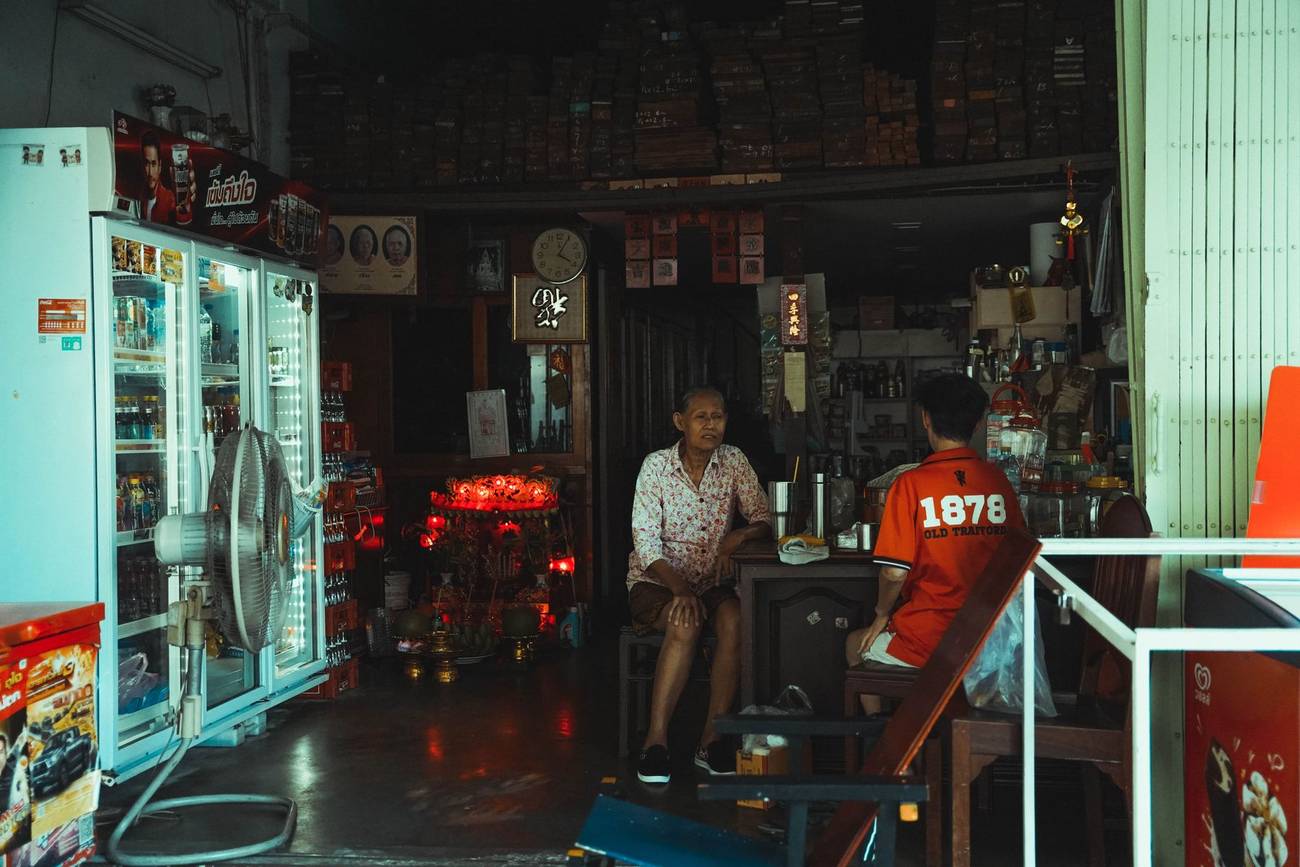
She sits down in the plastic chair, the boy's chair, and waits for a machine to finish a cycle that is washing nothing. From outside, if anyone passed, they would see a woman sitting in a laundry that is open at half past nine at night, with a light on and a machine running, and it would look as though the place were still going.
Which is more or less what she wants it to look like.
Demonstration text written to test the literary template. It is not attributed to any author and is not part of the publishable content. The drawing was made for this layout rather than taken from anywhere.
- Words
- Demonstration text, not attributed to any author
- Illustration
- Original ink drawing made for this layout
- Status
- Demonstration content, excluded from any public feed or sitemap.
Newsletter
A little more Bangkok in your inbox.
New portraits, places and stories from BKK SIDE B. Sent when an issue is ready, and not otherwise.
Read next
Know someone we should photograph? Send us a name.